


"603,635. This is the number of fast-food restaurants around the globe as of 2022."
Fast food chains around the world are valued at $647.7 Billion. It’s expected to compound with an annual rate of 4.6% in the upcoming years, i.e., to $998 Billion by 2028. In today’s world and age, most people recognize fast food chains with just their logo.
There’s been a significant rise in fast food restaurants in the last decades. This growth can be attributed to the increasing working population and their hectic schedules. Seeing the global scale and brand recognition of these brands might seem daunting. But this doesn’t mean that the local restaurant has to shut down. Far from it.
The increase in fast food chains doesn’t mean there’s no scope for local restaurant businesses. The local restaurant is the heart and soul of the neighborhood. It understands the local demographic well like no other. So there’s a lot you can learn from fast food restaurants as a restaurant owner.
Operational Efficiency
It is easy to get bogged down by current trends and styles in the food industry. The first thing a restaurant owner needs to take care of is the operations. Efficient operations lead to a well-functioning restaurant. The first step to a well-functioning restaurant is to strategize. Think of things like,
What’s the outcome you want?
What do you need to run the operations well for a long time?
What resources would you need to invest in?
Some examples to help you understand this better are:
Once you’ve listed the things you require to operate your restaurant well, the next step would be getting people or resources to help you do the same.
Customer Centricity
You’ve heard this enough times, but happy customers are at the heart of every successful restaurant. Fast food giants like Mcdonald’s, Starbucks, etc., keep the customer and their experience at the center of their design. It’s in the customer service, the ambiance, the marketing ads, etc.
Location
Fast food chains like McDonald’s, Burger King, Starbucks, etc., are always located in high-traffic areas. They understand the critical role of a location in running their business. As Ray Croc realizes in the movie “The Founder,” fast food chains are in the real-estate business, not the food business.
High-traffic locations mean a larger number of busy people in the area. Like a stack of dominoes, this means more people willing to spend on a quick meal, which leads to a more substantial brand presence.
Convenience Factor
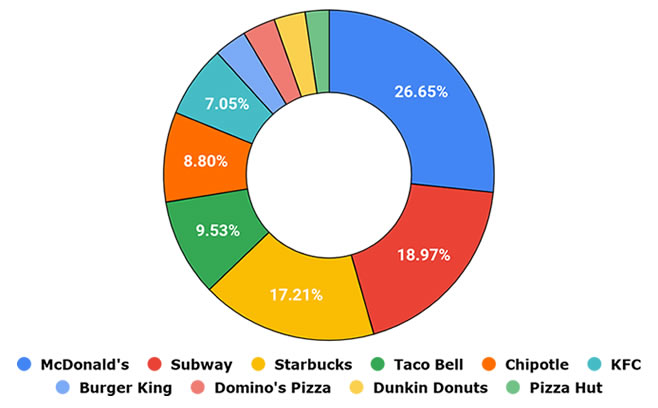
The busy, fast-paced life around the globe has led people to opt for ‘easy-to-eat’ food. Restaurants like McDonald’s and Subway have over 38,000 and 36,000 stores, respectively, around the globe. This increase in the number of stores worldwide can be attributed to one thing – its convenience.
It’s Fast
There’s a reason it’s called fast food. You don’t have to wait long for your food to arrive at a fast food restaurant. Unless, in some cases, it’s jam-packed. Many fast food chains like McDonald’s and Burger King have drive-throughs worldwide. These drive-throughs hardly take time to go through, and by the time you collect the food, it’s ready. A few of the tips above are why fast food businesses thrive. As a restaurant owner, which of the insight shared above would you use?
Published By Blessie


© Copyright 2026 www.horizonfbs.com.
All Rights Reserved.
© Copyright 2026 www.horizonfbs.com.
All Rights Reserved.

