

It would be an understatement to say that the pandemic did not affect our dining routines. As a result, customers now realize the ease of having food delivered right to their doorstep.
“I don’t need to drive through rush hour traffic and have a fifty percent chance at a good ambiance? I could sit at home in my pajamas, binge on my guilty-pleasure shows, and eat however I want? Go ahead and sign me up.”
Traditional food businesses are aligning themselves to these consumer trends. So why to invest in ambiance or seating when customers would rather order online, they ask.
Enter cloud kitchens, a concept seeing traction with small food businesses. It is for those who want to get their special menus to customers without the incumbent overheads. It goes by many names – ghost kitchens, virtual kitchens, or subscription kitchens.
We’ll walk you through what cloud kitchens are and some of the common questions you might have. This article will also answer some of the common questions that arise around this new phenomenon.
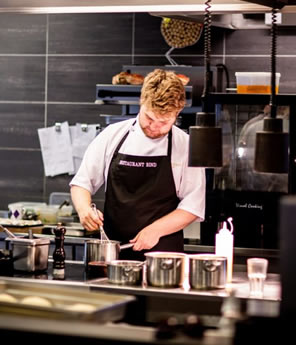
A cloud kitchen is just that – a commercial kitchen space. This commercial kitchen space has the ingredients and facilities you need to prepare your menu. Because they are just kitchen spaces, they do not have the option of dining on-site. This means that cloud kitchens save anywhere from AED 250,000 to 2,000,000 per year. Because they are dedicated to catering delivery orders, the labor costs also come down.
The pandemic has reshaped what eating outdoors means to the customer. What used to be an occasional indulgence is now a routine affair, available within a few clicks. $365 billion – that’s what the online food delivery market is expected to be worth by 2030.
This offers a chance for restaurant owners to downsize operations without losing business. Food entrepreneurs can also bring innovation into this space without crushing overheads. Cloud kitchens bring to the table one important element – the focus on improving their food recipes.
There are a couple of factors where both cloud and traditional kitchens have their merits. First, we’ve written enough for a general understanding. But we’ll be coming up with more nuanced content for deeper insights.
Capital and Space
An in-dining experience was something people looked forward to pre-pandemic. While the sentiment remains, food delivery poses a small but increasingly nagging problem. Traditional restaurants often maintain a dining area, a bar, a waiting area, and restrooms for customers and employees. Unfortunately, this space doesn’t come cheap, as noticed above.
Cloud kitchens don’t take up this cost. They focus on just the kitchen specifications and facilities. This allows them to invest in better kitchen facilities for their kitchen spaces. Having to invest only in kitchen equipment severely reduces the initial investments needed.
So what is best? You need to grab attention if you are just starting out with your food entrepreneurship journey. This is done by having enough customers acknowledge your menu. Once your concept becomes popular, you can consider giving customers the complete experience. This would include a physical location with your food brand’s aesthetics.
But if financing isn’t an issue, both options become valid. Having a fully functional restaurant is a dream for most food entrepreneurs.
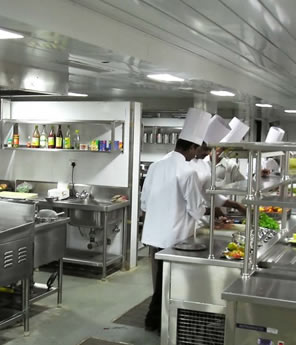
But if you already have a restaurant, both options are well worth considering. If you have significant footfall and increasing food delivery orders, maybe you should separate both from the same restaurant premises.
Staff
One of the major costs of running a restaurant is the monthly salaries of your staff. This is one area where cloud kitchens beat traditional restaurants hands down. There is no need for servers, bartenders, restaurant managers, or maintenance. This money can make the menu better suited for your customer’s tastes.
Profit Margins
Because there are no fixed overhead or startup costs, cloud kitchens can offer their menu at lower costs. Even so, they make more margins than a traditional restaurant. Traditional restaurants fail here because of these costs. Cloud kitchens can also use these margins to improve their menu.
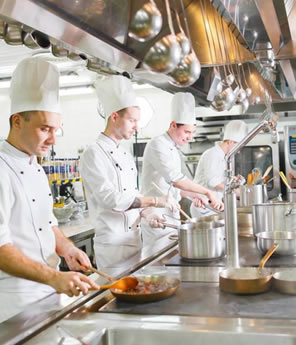
During the growth of cloud kitchens, we’ve seen specific business types that leveraged it the best. Some of them include:
As we laid out, there are different things to consider when you want to enter the food business. Just to summarize, here are some of the reasons why ghost kitchens are a booming opportunity.
Affordability
The overhead costs and initial investment make cloud kitchens a very attractive proposition. Compared to a traditional restaurant, you can have your kitchen up and running within weeks.
Convenience
With a cloud kitchen, your focus will be on and only on your food and how your customers take it. Forget maintenance, administration, security, licensing, and other worries. Virtual kitchen providers take care of all of these.
Meeting Customer Demand
Cloud kitchens allow you to accommodate the demands of your clients. You can also forecast demand based on customer feedback, leaving you prepared. In addition, ghost kitchen providers also take care of the delivery experience through efficient logistics and technological innovations at a lower cost.
Published By Vijay


© Copyright 2026 www.horizonfbs.com.
All Rights Reserved.
© Copyright 2026 www.horizonfbs.com.
All Rights Reserved.

